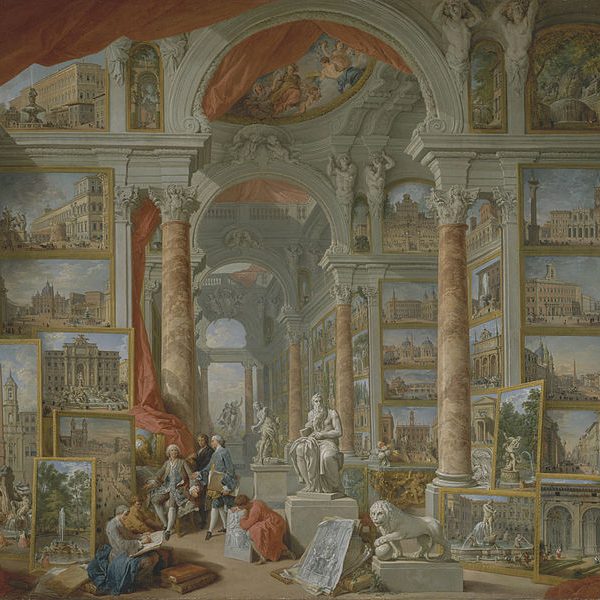

Special Issue: “Rez Diff: Indigenous Perspectives”
Guest-edited by Ashley Lance and Tara Wells.
Cover Image: Evan Shannon, Αυτοχθων
Ashley Lance and Tara Wells, Introducing Rez Diff: Indigenous Perspectives
Evan Shannon, Of the Earth and Sea: A Study in Minoan and Tlingit Art and an Indigenous Response to Autochthony
Kendall Lovely, (Re)visiting (New) Mexico’s Ancient Origins: Ancestral Native Kinship Beyond Classical Civitas
Keywords: kinship, civilization, Critical Indigenous Studies, Southwest anthropology, curation.
Abstract: This paper focuses on the foundations and legacies of anthropology in the American Southwest, building from previous classical reception scholarship which considers the ways in which classicism interacted with colonialism in the early anthropology of Lewis Henry Morgan and his contemporaries. Due to Morgan’s studies, lands in Northern New Mexico, then a recent acquisition of the United States, appeared alongside interests in classical archeology for the first annual Archaeological Institute of America report. Yet this examination seeks to revisit Morgan’s conceptions of civilization and to recenter Indigenous kinship and connection to these lands. Through Indigenous feminist revisioning, this revisioning asserts the importance of methodologies in ethical care against the colonial abandonment of Indigenous peoples to static stages of antiquity.
Ashton Rodgers, Lower Case “indigenous”: Indexing an Archive and Archaeology of Whiteness in Studies of Ancient Greek Colonization
Keywords:
Abstract: This paper examines the discursive and theoretical matrix deployed to conceptualize “indigenous” peoples, landscapes, and material culture within the context of the archaeology of Greek colonization in southern Italy during the Iron Age. Of particular interest is how ways of knowing as well as knowledge produced around ancient “Greek colonization” reproduce white and colonial ways of knowing contemporary Indigenous and colonized peoples and communities. This paper will suggest that “indigenous” as a category comes to represent a stalking horse for conceptual voids in approaches to archaeological studies of ancient Greek colonization. A close reading of the archive of the archaeology of Greek colonization in southern Italy positions this paper to reflect on larger questions including how invented images of the “indigenous” can become violently appropriated to settler colonial projects in classics and how the indigenization of ancient southern Italic people represents a maneuver to appropriate critical theory.
Cassandra M. M. Casias, Punic Silence: Recovering Mestizo Voices in Augustin’s Africa
Keywords: Roman Africa, Punic, mestizaje, Augustine of Hippo.
Abstract: This article explores how educated men in late antique North Africa navigated the linguistic and cultural frontiers between the Latin and Punic languages. Using the surviving corpus of Augustine of Hippo, it provides case studies of provincials caught between their African origins and Roman education: Augustine’s son Adeodatus, Augustine himself as a bishop, grammarian Maximus of Madauros, and controversial bishop Antoninus of Fussala. By applying a post-colonial framework of mestizaje, this study elucidates the ambivalent identities of North African elites while also exposing the marginalization of Punic-speaking populations in rural areas. Left without the same recourse to appeal to the pope or the Roman legal system, rural Punic speakers relied upon collective action to enforce their will.
Jennifer Komorowski, ‘Does Indians Have Feelings?’ A Reverse Chronology of Indigenous Stereotypes
Keywords: Indigenous, feelings, soul, 1492, George Manuel.
Abstract: Over 50 years have now passed since the publication of George Manuel and Michael Posluns’ groundbreaking text The Fourth World: An Indian Reality (1974) and the political and philosophical ideas presented prove to be just as important as ever. In the introduction, Manuel recounts the story of a settler co-worker asking him the question “Does Indians have feelings?” This question ties directly into the many myths perpetuated about Indigenous peoples, and reveals the denial of humanity that many Indigenous people experience. This article will trace philosophical ideas of the soul in a reverse chronology beginning with contemporary stereotypes and finding connections with seventeenth century ideas about Indigenous people, the soul, and animals.
Ashley Lance, Indigenous Thoughts and Ancient Philosophy
Keywords: Indigenous philosophy, ancient philosophy, Charles Mills, Hamid Dabashi, Global philosophy.
Abstract: This article grapples with the relationships and assumptions that define how Indigenous philosophy is or is not related to the study of ancient philosophy. I show that these assumptions are defined by a willingness to contrast Greek and Roman philosophy with Indigenous peoples and knowledge systems as being from a distant past. I argue that this tendency reveals larger questions at hand: what ‘counts’ as philosophy? Who can ‘do’ philosophy? In the first section of this article, I address these questions following the works of Charles Mills, Hamid Dabashi. I argue that Indigenous people can do philosophy. In the final sections of this article, taking lessons from Coyote, V.F. Cordova, and Brian Burkhart I demonstrate how Indigenous philosophies are beneficial for creating space for new methods on approaching ancient texts.
Res Diff 2.2 (2025) Complete Issue
 Res Difficiles | Difficult conversations in classics