
Special Issue: “Re(Orient): Reception, Power, and Asian Experience.”
Guest-edited by Arum Park, Chris Waldo, and Tori Lee.
Arum Park, Chris Waldo, and Tori Lee, “Introduction / Re(Orientation)”
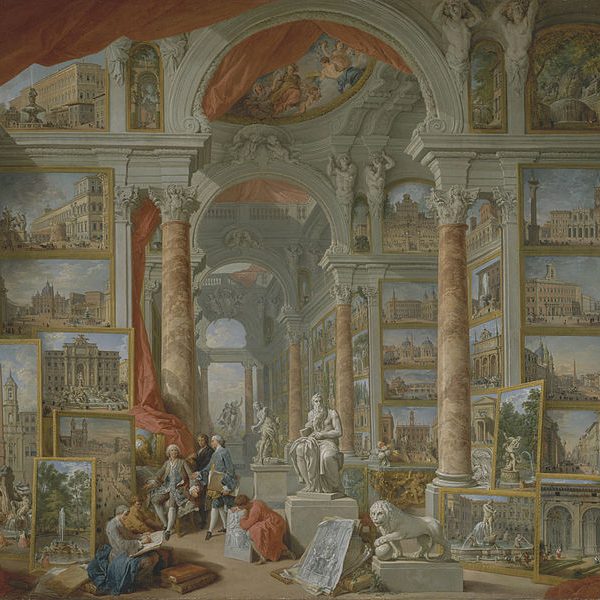
Hardeep Singh Dhindsa, ‘Strange and Uncouth’: Exoticism and Orientalism in British Responses to the Eighteenth-Century Excavations at Pompeii and Herculaneum
Keywords: colonial travel literature, Grand Tour, orientalism, primitivism.
Abstract: In the mid-eighteenth century, the Roman towns that were buried under the debris from the eruption of Vesuvius in 79 CE began to be excavated. The findings drew an unparalleled number of travelers to Naples, eager to visit the Bourbon excavations and see for themselves the remains of the best-preserved example of daily Roman life. The immediate impact that Pompeian wall paintings and decorative arts had on eighteenth-century interior design is well studied, but what remains relatively underexplored are the reactions of shock (and horror) to the artefacts being unearthed in towns like Pompeii and Herculaneum. Here I show how some British travelers understood the artefacts through a distinctly colonial lens. Some likened the vividly-colored wall paintings to Indian or Chinese art, while others were deeply disturbed by the proliferation of erotic statues which recalled the phallic objects described in recent reports from the South Sea islands. My research brings to light a different experience of the British Grand Tour, where travel to the Mediterranean drew heavily upon foreign tropes found in contemporary colonial travel literature.
Keywords: architecture, Classical reception, diaspora, migration, Neoclassical.
Abstract: The county of Kaiping, located in Guangdong Province, China, is well-known for the local watchtowers called diaolou which are commonly found throughout its landscape. The diaolou is a form of defensive architecture first developed in the Ming era. During the late 19th and early 20th centuries, Kaiping saw a boom in diaolou building, accompanied by rising numbers of local people migrating to the West or Western colonial spaces in East Asia and then later returning home. The diaolou built during this period display a unique mix of Western architecture, often recognizably Classical or Classicizing, set in a traditional Chinese structure. This article argues that the reception of Western/Classical architecture in these buildings was multivalent, structured along the following themes. First, the Western/Classical references were not drawing from true antique Classical architecture, but rather, on contemporary Neoclassical architecture in Asian colonial spaces, Australia, and North America. Second, the designs of these buildings reference how their owners and builders experienced overseas migration into Western spaces during this period. And lastly, these diaolou have served as enduring foci of cultural memory regarding the diasporic experiences of the local community over time.
Keywords: Contemporary Chinese Poetry, Haizi, Reception, Sappho.
Abstract: This article examines the contemporary poet Haizi’s response to a hybrid Chinese and Western tradition of mediating Sappho in his short poem To Sappho, and pays particular attention to the routes of transmission and translation through which Haizi encountered the Greek poet. For Haizi, Sappho comes to represent an elusive lyric ideal as he strives for affective poetic language in the wake of the Cultural Revolution’s impact on Chinese literature. Echoing and reconfiguring imagery from her available poetry and biography, Haizi domesticates Sappho into his symbolic, rural landscape of poetry, thereby creating a paradigm to contemplate his own poetic identity and legacy.
Dominic Machado, Tam magnus ex Asia veni: Towards an Asian American Hermeneutics in Classics
Keywords: Asian American hermeneutics, Aeneid, disciplinary reform, freedmen, Petronius, racialization, romantic capitalism.
Abstract: Riffing off Vincent Wimbush’s directive to consider Blackness in biblical studies, this article imagines what it might mean to center Asian Americanness in the study of the classics. I offer two brief case studies that offer one possible vision of what an Asian American hermeneutics for classics might look like. These two case studies focus on two Asian immigrants in Roman culture—Aeneas (as well as his fellow Trojans) in Vergil’s Aeneid and Trimalchio in Petronius’ Satyrica—and how reading them through an Asian Americanist lens can shed light on these figures and, more broadly, on contemporary Roman social, cultural, and political structures. The article concludes by considering the ethics that might attend further attempts at developing an Asian American hermeneutics in classics.
 Res Difficiles | Difficult conversations in classics